Wind energy has become one of the most important renewable technologies for advancing toward a more sustainable energy model. Its global expansion responds to the urgent need to
This rapid development highlights not only the environmental and economic potential of wind energy but also the necessity of well-trained professionals capable of managing complex systems. However, this growth will only be possible if there is solid technical training that prepares engineers and technicians to meet the challenges involved in the development, operation, and maintenance of modern wind power systems.
In this context, EDIBON, an international leader in educational technology, plays a fundamental role by offering advanced equipment for the practical study of wind energy. Through high-precision educational instruments and a hands-on, experimentation-based approach, EDIBON enables institutions worldwide to train specialized professionals who are ready to join a rapidly evolving and technologically demanding sector. By combining theoretical knowledge with practical experimentation, students gain a holistic understanding of wind energy systems, from the physics of wind turbines to the integration of power into the grid.
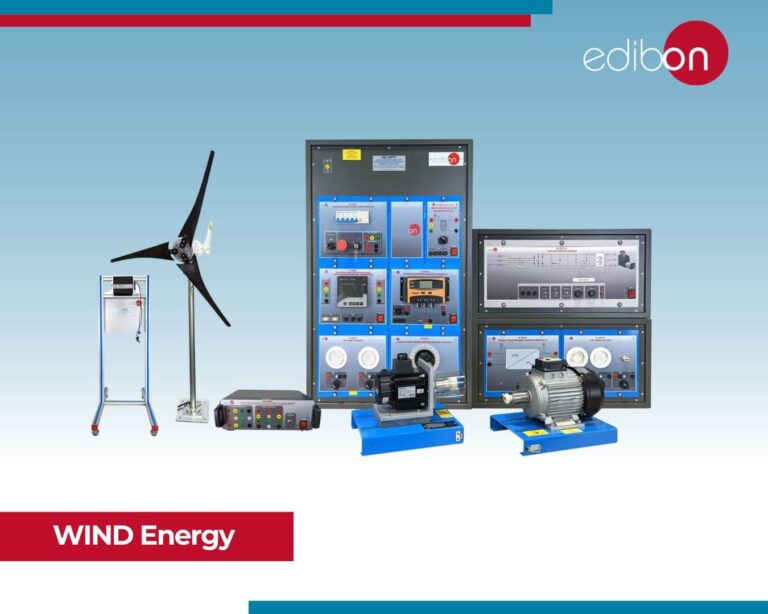
The importance of training professionals in wind energy
The global energy transition demands experts with deep knowledge across multiple technical areas, including aerodynamics, power electronics, control systems, grid integration, and performance analysis. Today’s wind turbines are far more than simple mechanical devices; they are complex systems that integrate advanced mechanics, intelligent software, and highly precise electronics. For instance, modern turbines often feature sensors, pitch control systems, and advanced algorithms to optimize efficiency under varying wind conditions. Without proper practical training, ensuring the efficient and safe operation of wind farms would be virtually impossible.
Educational institutions and vocational training centers therefore require equipment that allows students to explore essential phenomena such as wind-to-electricity conversion, blade dynamics at different wind speeds, the behavior of turbines under turbulent conditions, and the functioning of control and protection devices. Mastering these competencies is crucial in a job market where the demand for wind energy specialists continues to grow. Professionals trained in these areas can contribute to improving turbine efficiency, reducing downtime, and ensuring that wind energy continues to be a cost-competitive and reliable renewable source.
Moreover, practical training provides students with critical problem-solving skills. Working directly with real or simulated turbines allows them to experience firsthand issues such as grid instability, generator performance deviations, or mechanical wear and tear. This experiential learning prepares graduates not only to understand theoretical concepts but also to respond effectively to real-world operational challenges, an essential skill set in a sector where innovation and technical expertise are constantly evolving.
EDIBON’s contribution to the study of wind energy
EDIBON has developed a wide range of educational equipment specifically designed to address wind energy from multiple perspectives, combining mechanical, electrical, and software components. Among the most notable equipment are:
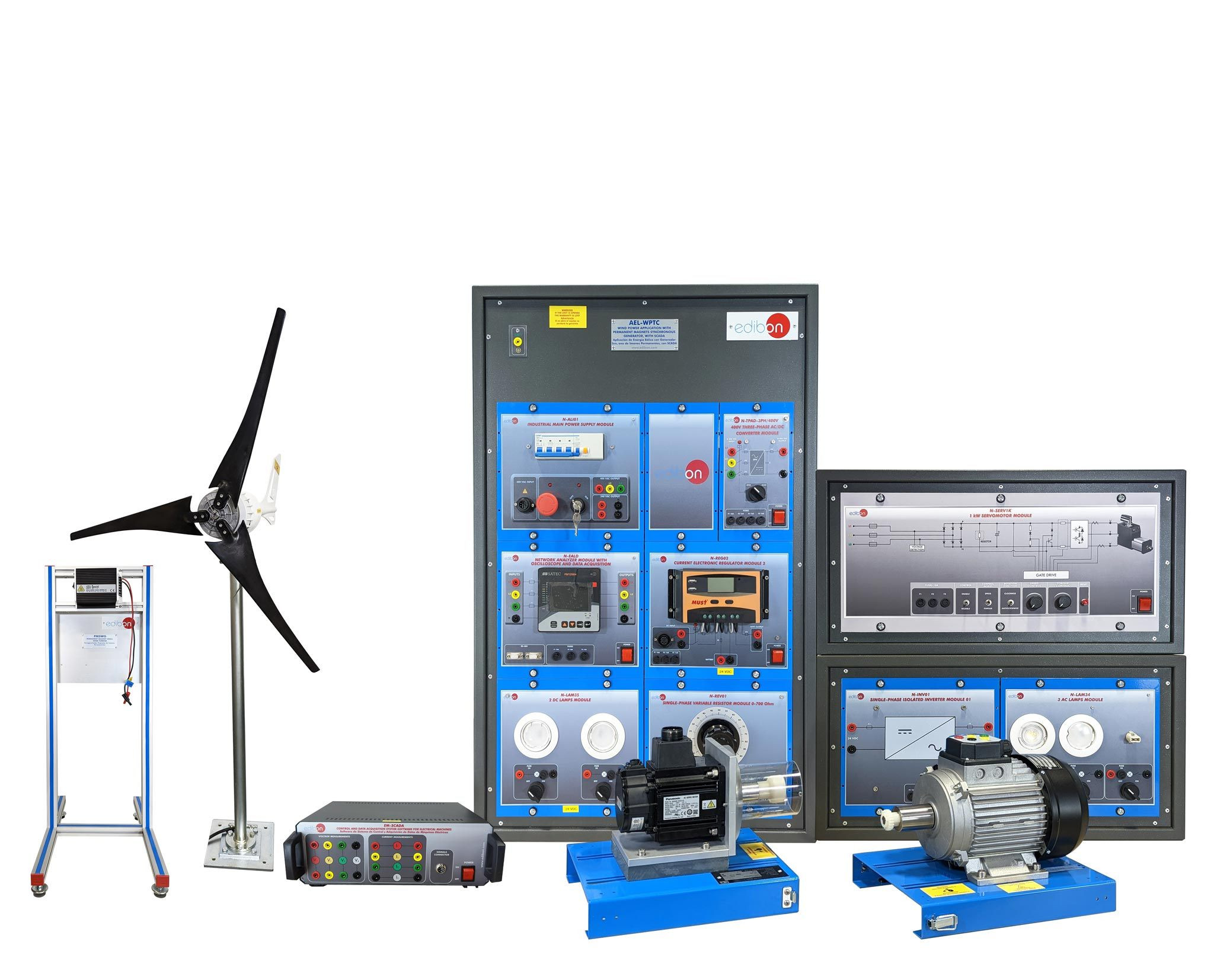
- The Wind Power Application with Permanent Magnets Synchronous Generator, with SCADA (AEL-WPTC), which allows students to study the conversion of wind energy into electricity using a permanent magnet synchronous generator. This equipment provides insights into generator behavior, energy conversion efficiency, and the impact of varying wind speeds on electrical output.
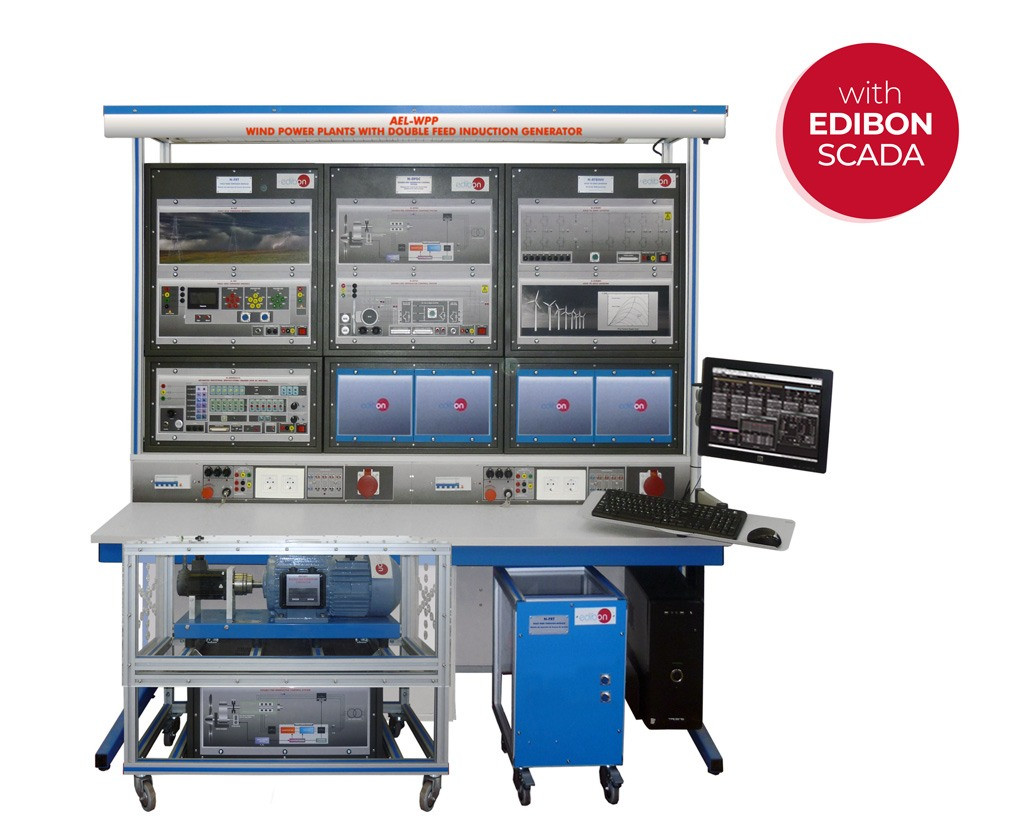
- The computer Controlled Wind Power Plants with Double Feed Induction Generator Application (AEL-WPP), designed to investigate the design, operation, and control strategies of modern wind power stations. Students can explore the characteristics of double-fed induction generators, grid synchronization, and power factor optimization in a controlled environment.
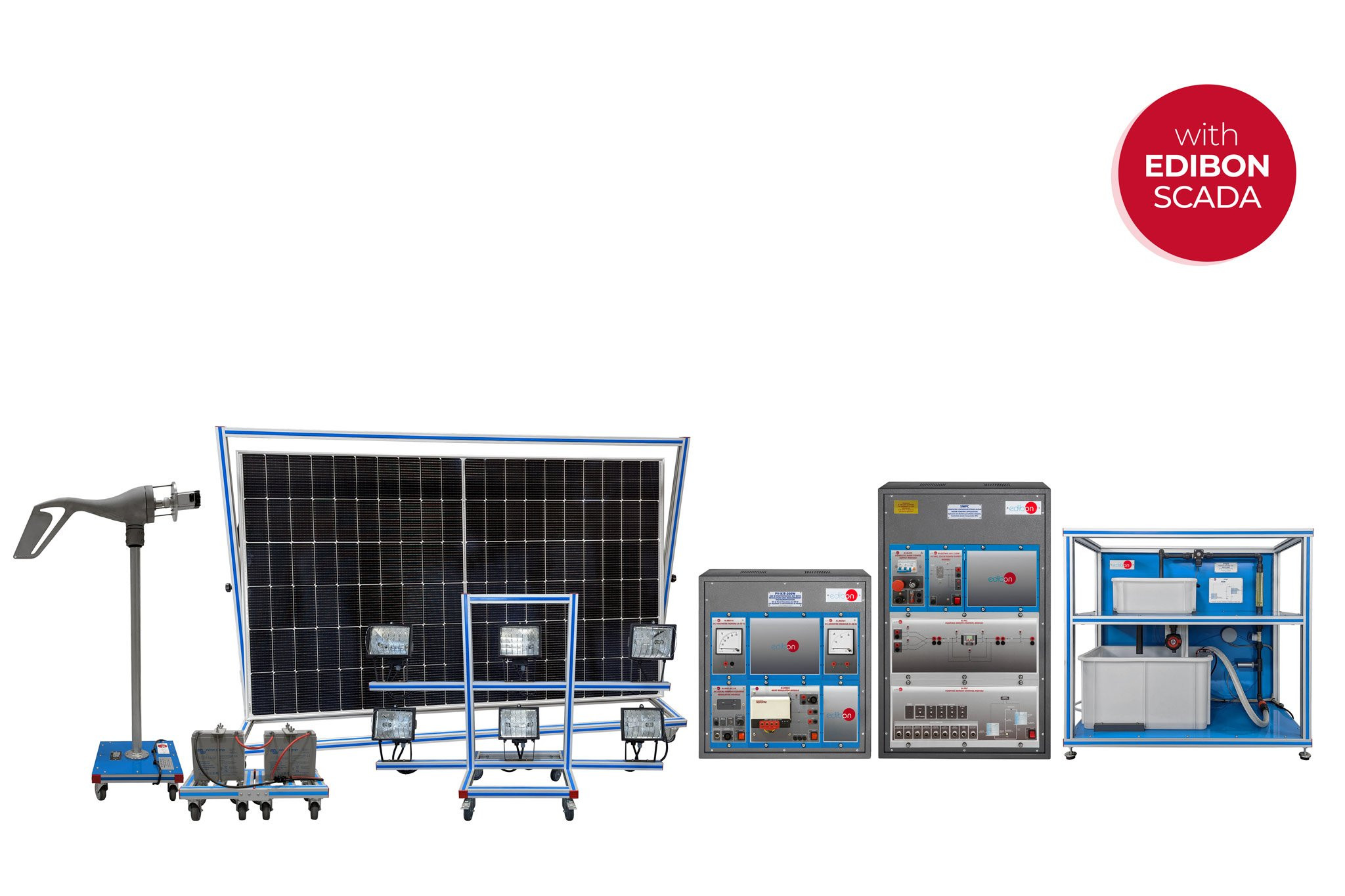
- The Computer Controlled Single Water Pumping Application (SWPC), which demonstrates the basic principles of pumping equipment in isolated networks. By simulating water pumping powered by wind energy, learners understand the relationship between generation and mechanical work, highlighting practical applications in off-grid or remote areas.
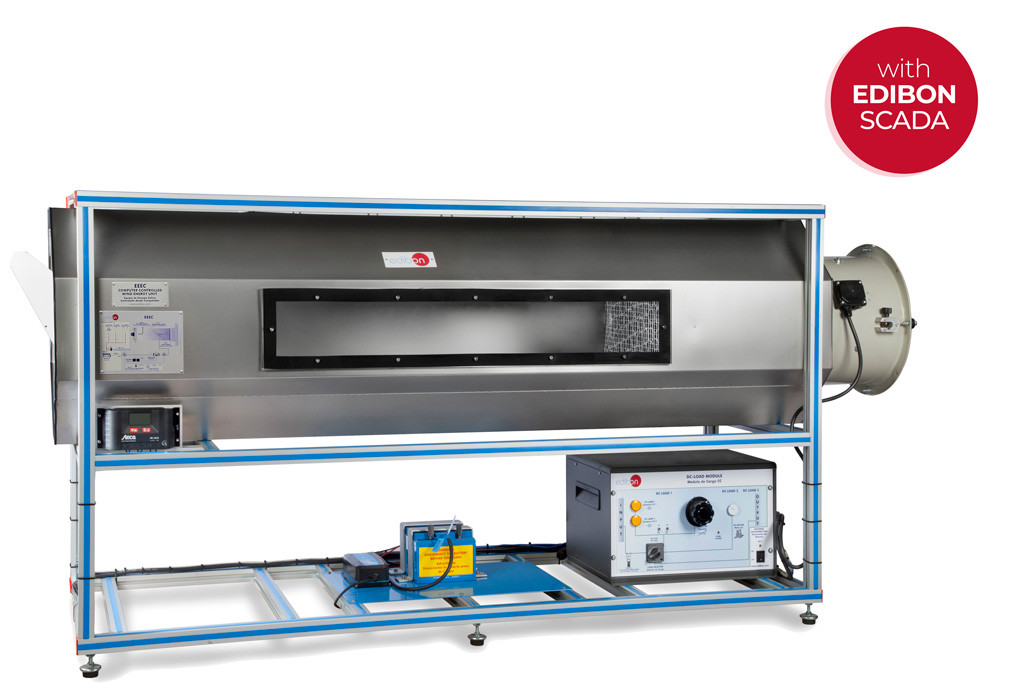
- The Computer Controlled Wind Energy Unit (EEEC), which focuses on converting kinetic wind energy into electrical energy while analyzing the influence of environmental and mechanical factors on performance. This unit allows for experimentation with blade angles, wind speeds, and load conditions, providing a hands-on understanding of turbine efficiency and energy production variability.
Thanks to EDIBON’s SCADA software, students can monitor parameters in real-time, analyze historical data, and simulate a wide range of operational conditions. This feature provides a learning experience that closely resembles industrial environments, preparing students to transition smoothly into professional roles. By integrating data acquisition and control systems into the educational process, EDIBON bridges the gap between classroom theory and the operational realities of modern wind farms.
The future of wind energy and technical training
Wind energy is poised to remain one of the main drivers of the global energy transition. According to recent projections, the installed capacity of wind power is expected to increase substantially in the coming decades, driven by technological advancements and the urgency of climate targets. This growth requires not only investment in infrastructure but also the development of a highly skilled workforce capable of innovating, operating, and maintaining these complex systems.
Gracias a su compromiso con la calidad, la innovación y el aprendizaje experiencial, EDIBON continúa fortaleciendo la formación técnica en energía eólica, contribuyendo directamente a un futuro energético más sostenible, eficiente y responsable. Al dotar a los estudiantes de las herramientas y conocimientos necesarios para entender y optimizar los sistemas eólicos, EDIBON desempeña un papel clave en el objetivo global de reducir las emisiones de carbono, fomentar la integración de energías renovables y promover la responsabilidad ambiental.
Through its commitment to quality, innovation, and experiential learning, EDIBON continues to strengthen technical training in wind energy, contributing directly to a more sustainable, efficient, and responsible energy future. By equipping students with the equipment and knowledge to understand and optimize wind energy systems, EDIBON plays a pivotal role in the broader objective of reducing carbon emissions, fostering renewable integration, and promoting environmental stewardship.
In summary
In conclusion, wind energy training is far more than an academic exercise; it is a strategic investment in the planet’s future. With the support of advanced educational technologies like those provided by EDIBON, institutions worldwide can cultivate the next generation of experts who will lead the renewable energy revolution. By combining theoretical knowledge with practical experience, these training programs ensure that wind energy continues to grow efficiently, safely, and sustainably, shaping a cleaner and greener future for all.