
The food industry is undergoing a transformation in which industrial automation is playing an increasingly important role. Rising costs of raw materials, energy, and labor, combined with the need to operate more efficiently while maintaining high quality standards, are driving companies to digitize and automate their processes.
Automation does not simply mean replacing manual tasks with machines. It involves enabling different plant operations to be carried out, monitored, and optimized in a coordinated manner using sensors, control systems, software, and data analysis.
The result can be significant reductions in operating costs, particularly when automation is applied to processes where precision, repeatability, and variable control are critical.
Where are the main cost savings generated?
In a food processing plant, small deviations can have a considerable impact when they are repeated over thousands of production cycles. Incorrect dosing, excessive heating times, or an unexpected shutdown can result in wasted product, additional energy consumption, or lost productivity.
Automation makes it possible to address these critical points directly
1. Less waste through greater precision
Food dosing and processing require a high degree of precision. When more raw material is used than necessary, the additional cost may seem minimal in a single operation, but it becomes significant when multiplied across hundreds or thousands of production cycles.
Automated systems make it possible to control variables such as quantities, processing times, temperatures, and speeds with greater precision and repeatability. This helps reduce errors and maintain more consistent production conditions.
In addition, process monitoring makes it easier to detect deviations before they affect large quantities of product.
2. Greater productivity and less downtime
Another major benefit of industrial automation is its ability to coordinate different stages of a process.
Feeding, dosing, filling, sealing, conveying, and processing can be integrated into an automated sequence. This reduces certain manual interventions and the time associated with changeovers, waiting periods, or operating errors.
This does not necessarily mean eliminating jobs, but rather transforming the tasks performed by professionals. Employees can take on responsibilities related to supervision, programming, analysis, and optimization, while automated systems handle repetitive and highly standardized operations.
3. Energy consumption control
Energy is another significant cost for the food industry, particularly in processes that require heating, refrigeration, freezing, or drying.
Automation also makes it possible to control more precisely when and for how long specific equipment operates. Sensors and control systems allow process conditions to be adjusted and help avoid unnecessary energy consumption whenever possible.
In thermal processes, for example, maintaining a temperature for longer than necessary can result in additional energy consumption without adding value to the product. An appropriate control system makes it possible to monitor this variable and respond accordingly.
4. Fewer production stops and more efficient maintenance
An unexpected production line shutdown can be costly. It not only requires the underlying fault to be repaired, but may also interrupt related processes and potentially result in product losses.
Digitalization and automation make it possible to continuously collect information about equipment performance. Analyzing this data helps identify abnormal behavior and supports the implementation of more efficient maintenance strategies.
The objective is to progressively move from reacting to equipment failures toward identifying early warning signs that may indicate when equipment requires inspection or maintenance.
5. Data for better decision-making
One of the most important changes introduced by automation is that industrial processes no longer depend exclusively on operator observation.
Sensors provide information, while control systems make it possible to visualize, record, and analyze that information. This allows production cycles to be compared, deviations to be identified, performance to be evaluated, and data-driven decisions to be made.
Therefore, automation is not simply about making a machine operate automatically. It also means turning the industrial process into a valuable source of information for its own continuous optimization.
Automation also requires specialized training
The transition toward increasingly automated factories is creating a parallel need for professionals who are capable of understanding, programming, and supervising these technologies.
PLCs, sensors, actuators, SCADA systems, data acquisition, and process control are all part of the language of modern automated industry. For this reason, hands-on training is essential to ensure that future professionals understand how these different elements interact within a real industrial process.
This is where educational technology can play a fundamental role.
EDIBON: Bringing food industry automation into the simulation environment
At EDIBON, automation applied to the food industry can be studied through equipment that reproduces different industrial operations at laboratory scale and allows users to work directly with control and data acquisition systems.
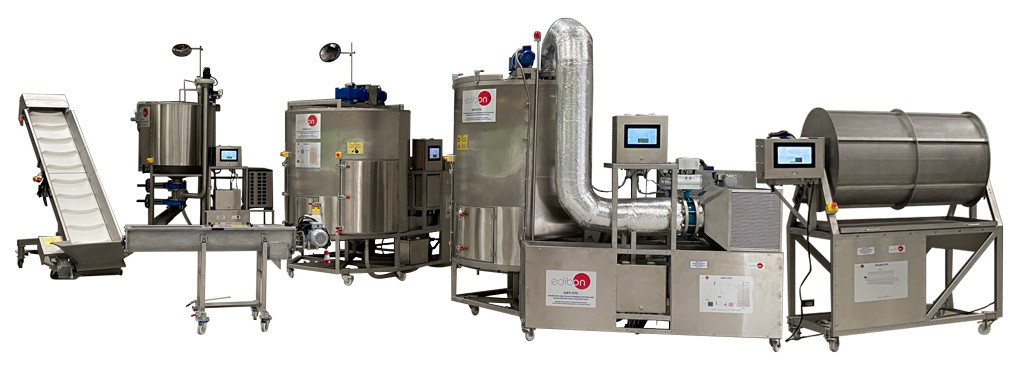
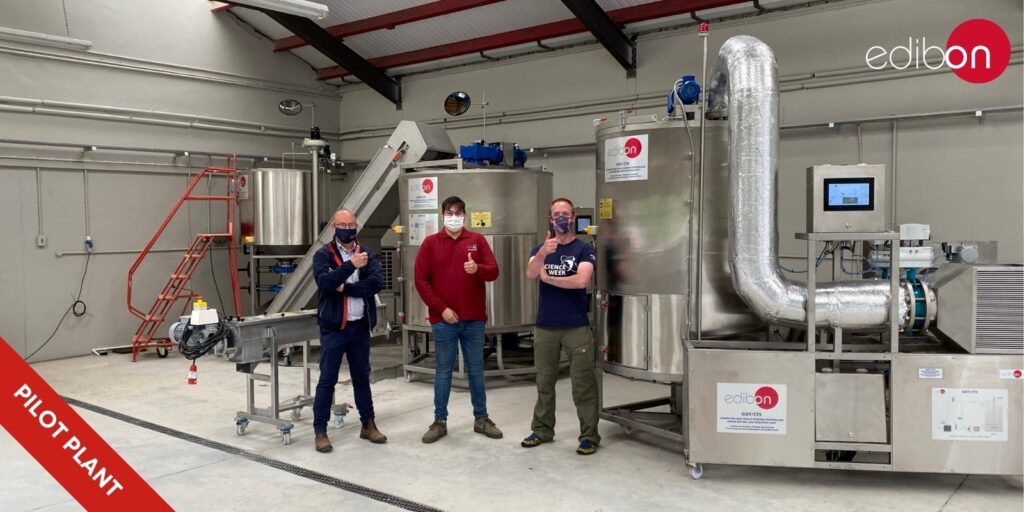
One example is the Pilot Plant for Cereal Malting (CE00/MA).. This is a pilot scale plant that includes all the industrial stages for malt production. This plant includes a steeping tank, a germinator, a dryer-roaster and a deculmer. In addition, it includes the auxiliary equipment necessary to carry out the operation in a comfortable and safe way.
This type of hands-on experimentation provides a practical understanding of how an operation that is automated in industry depends on the correct interaction between sensors, actuators, control systems, and software.
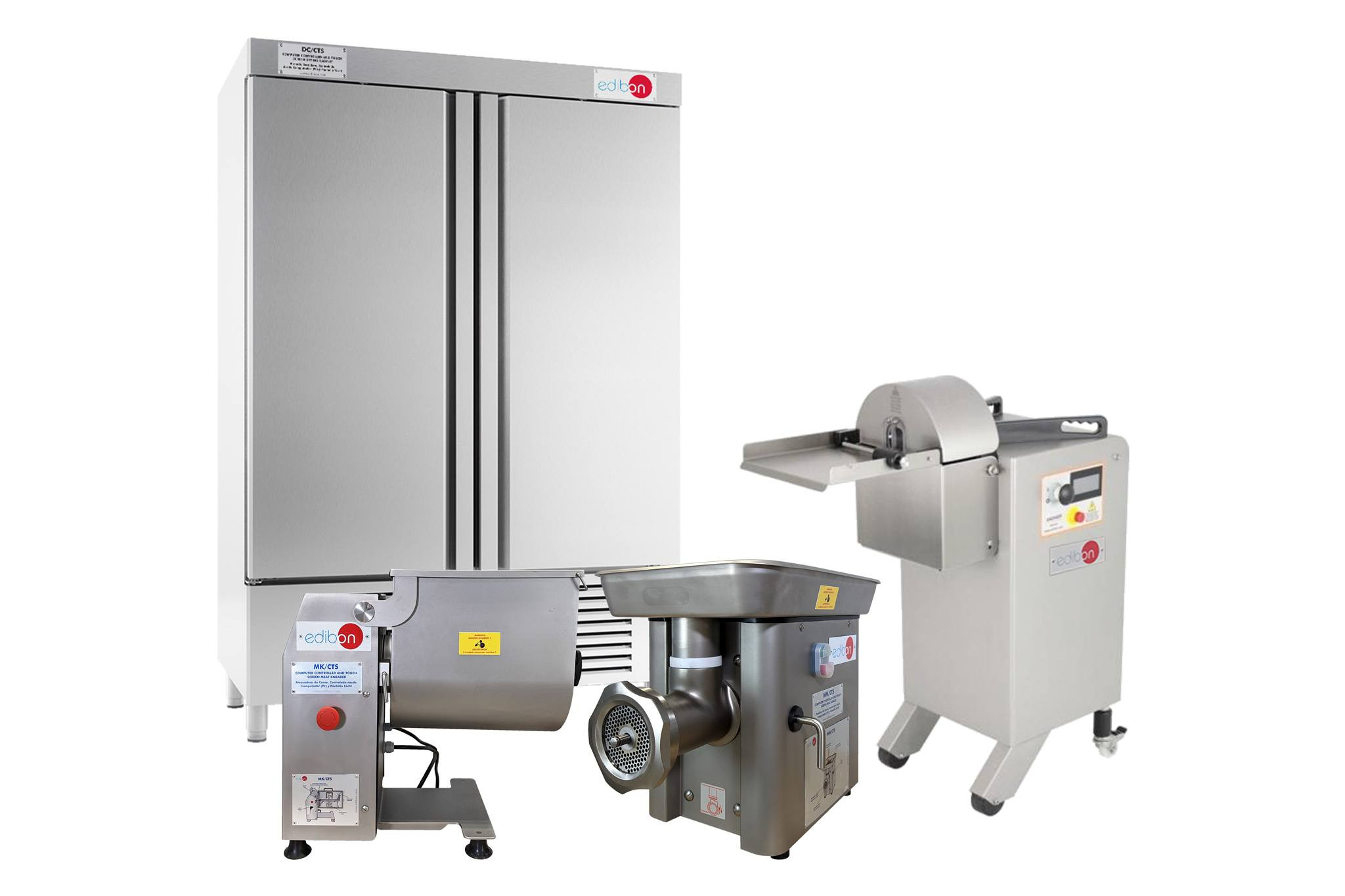
Another example is the Pilot Plant for the Production of Cured Pieces and Sausages (CA00/CUPS), designed by EDIBON, to be able to obtain cured products from untreated meat.
From automation to the factory of the future
Industrial automation is transforming the food industry by enabling greater precision, reducing waste, optimizing resources, and using production data to continuously improve processes.
However, technology alone is not enough. To take full advantage of its potential, companies need professionals who understand these technologies and know how to use them effectively.
For this reason, hands-on training in automation, process control, and digitalization is becoming increasingly important. Equipment such as those developed by EDIBON brings concepts that are already part of today’s industrial plants into the laboratory, creating an environment where users can experiment, analyze data, and understand how automated processes operate.
The food industry of the future will be more automated, connected, and data-driven. Preparing the professionals who will make this transformation possible is the first step toward achieving more efficient and competitive processes.
Her profile combines the analytical and structured mindset of engineering with a practical focus on product development, process optimization, and cross-functional coordination. She works with clear criteria of quality, usability, consistency, and reliability, ensuring that products are technically sound and aligned with both business and user needs.
Throughout her career, she has contributed to initiatives related to product and process improvement, digital solutions, and structured project management, participating in the definition, coordination, and continuous evolution of products and services. She brings an analytical vision together with attention to detail, clarity, and coherence, allowing her to adapt products to different contexts, markets, and brand requirements.
Interested in innovation, digital evolution, and best practices in product development, she approaches her work from a practical, well-documented perspective focused on continuous improvement and the creation of useful, reliable, and high-quality products for end users.
- How Industrial Automation Is Reducing Costs in the Food Industry
- 9月 21, 2026 - 5 crucial benefits of digitizing Technical Laboratories in 2026 - 9月 21, 2026
- The future of energy: Revolutionizing Smart Grids - 7月 21, 2026