
Modern industry is advancing at an unprecedented pace. Automation, digitalization, and the integration of intelligent systems have completely transformed the way industrial processes are designed, produced, and optimized. In this environment, PLC (Programmable Logic Controller) control has become the true “brain” of modern mechatronics.
Its ability to coordinate sensors, actuators, and complex mechanical systems makes it an essential component of Industry 4.0, where precision, efficiency, and flexibility are critical factors.
The PLC as the Core of Mechatronics
Mechatronics is a multidisciplinary field that integrates mechanics, electronics, pneumatics, robotics, and industrial programming. At the center of this integration is the PLC, responsible for interpreting signals, executing instructions, and controlling processes in real time.
A PLC is much more than a control device; it is the element that brings automated systems to life. Through its programming, it can:
- Read signals from sensors (pressure, position, proximity, temperature, etc.).
- Activate actuators such as motors, pneumatic cylinders, and relays.
- Coordinate complex production sequences.
- Ensure system safety and operational efficiency.
In other words, the PLC acts as the central nervous system of any modern mechatronic installation.
Industrial Automation as the Foundation of Industry 4.0
Industrial automation has become one of the fundamental pillars of sectors such as automotive manufacturing, food processing, logistics, energy, and advanced manufacturing. In all these industries, PLC-based systems help optimize processes, reduce errors, and increase productivity.
Thanks to these technologies, smart factories can operate in a coordinated, efficient, and nearly autonomous manner, responding in real time to production requirements and adapting to increasingly dynamic environments.
The Importance of Hands-On Training in PLC Mechatronics
The growth of industrial automation has created an increasing demand for highly qualified professionals. Understanding the theory is no longer enough; practical experience with real or simulated systems that replicate industrial environments is essential.
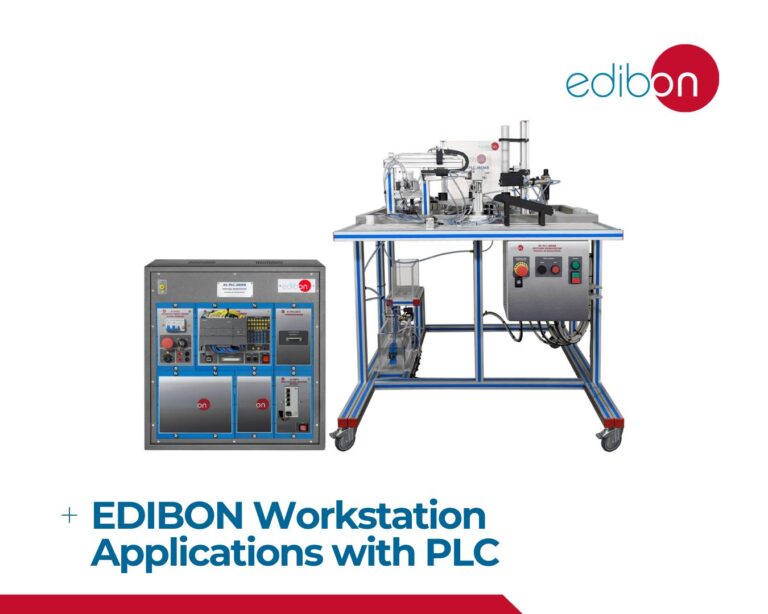
PLC training makes this possible by integrating theoretical knowledge with practical applications through the use of automated workstations, for example.
In this context, universities, vocational training centers, and technical laboratories require solutions that allow students to face real industrial scenarios, from automated transport systems to complete production lines.
EDIBON: A Benchmark in Technical Training and Industrial Automation
One of the aspects that distinguishes EDIBON in the field of industrial automation is its ability to adapt to the specific requirements of each institution.
Unlike closed solutions, EDIBON does not limit training to a single control platform. Users can select the PLC technology already implemented in their laboratories, the one required by their educational programs, or the platform with the strongest presence in their regional industrial sector.
For this reason, EDIBON workstations can be integrated with some of the most recognized PLC brands in the market, including Panasonic, Siemens, Allen-Bradley, Mitsubishi and Omronamong othrts.
This approach allows students to work with real industrial technologies, creating a much smoother transition between academic training and the professional environment.
The PLC Technology Each User Needs, Integrated Within a Unified Learning Philosophy
In an industrial automation laboratory, the objective is not simply to learn how to program a PLC, but to understand how the various elements of a real automated process interact.
For this reason, EDIBON combines industrial mechatronic workstations with the PLC technology that best fits each project. This allows students to study sensors, actuators, pneumatics, material handling systems, part manipulation processes, and automated sequences using the same type of controller they are likely to encounter in industry.
This flexibility makes EDIBON’s PLC laboratories highly customizable solutions aligned with the current needs of universities, technology centers, and vocational education institutions.
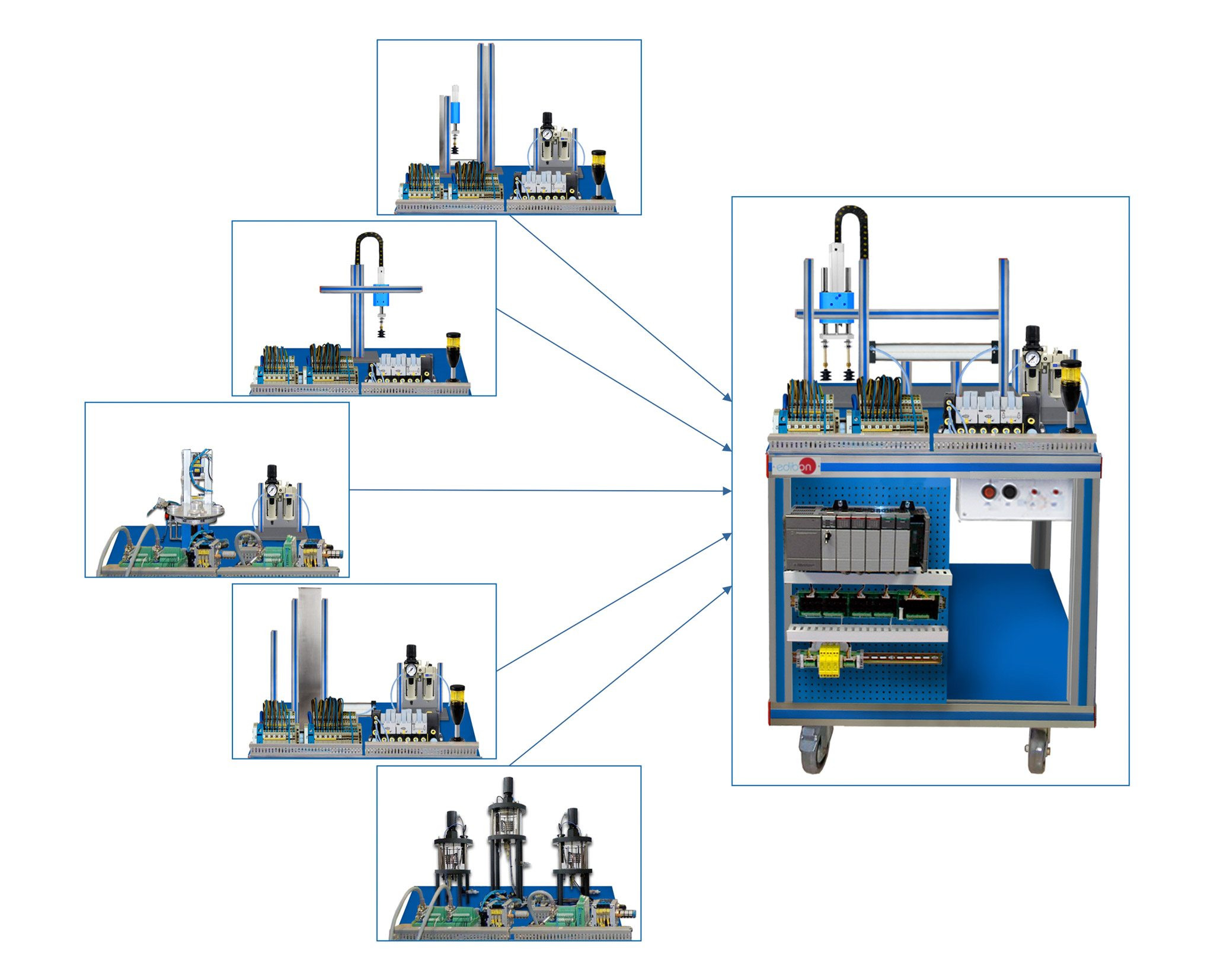
The following stations represent only a few examples from EDIBON’s extensive range of PLC and industrial automation solutions. In addition to these systems, EDIBON offers numerous additional workstations and can also design customized solutions adapted to the specific training or research requirements of each institution.
Industrial Workstations for Learning Automation with Any PLC Platform
The workstations developed by EDIBON are designed to replicate real industrial processes through fully functional mechatronic systems. These solutions enable students to study both PLC programming and the interaction among all the components involved in an automated system.
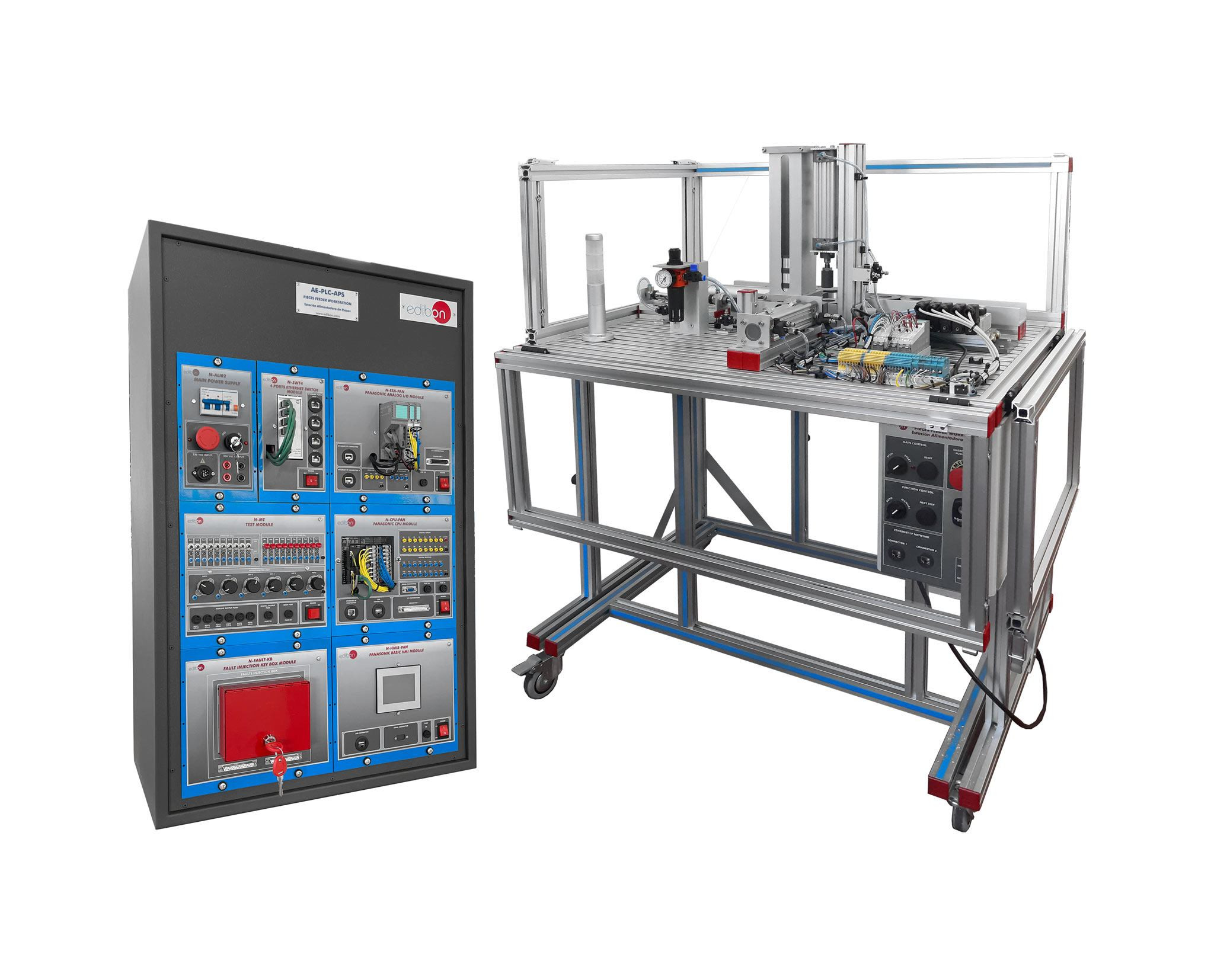
- Pieces Feeder Workstation (AE-PLC-APS):This workstation enables the study of automatic part-feeding systems commonly used in industrial production lines. Students can work with sensors, pneumatic actuators, and PLC control to understand the full operation of an automated process.
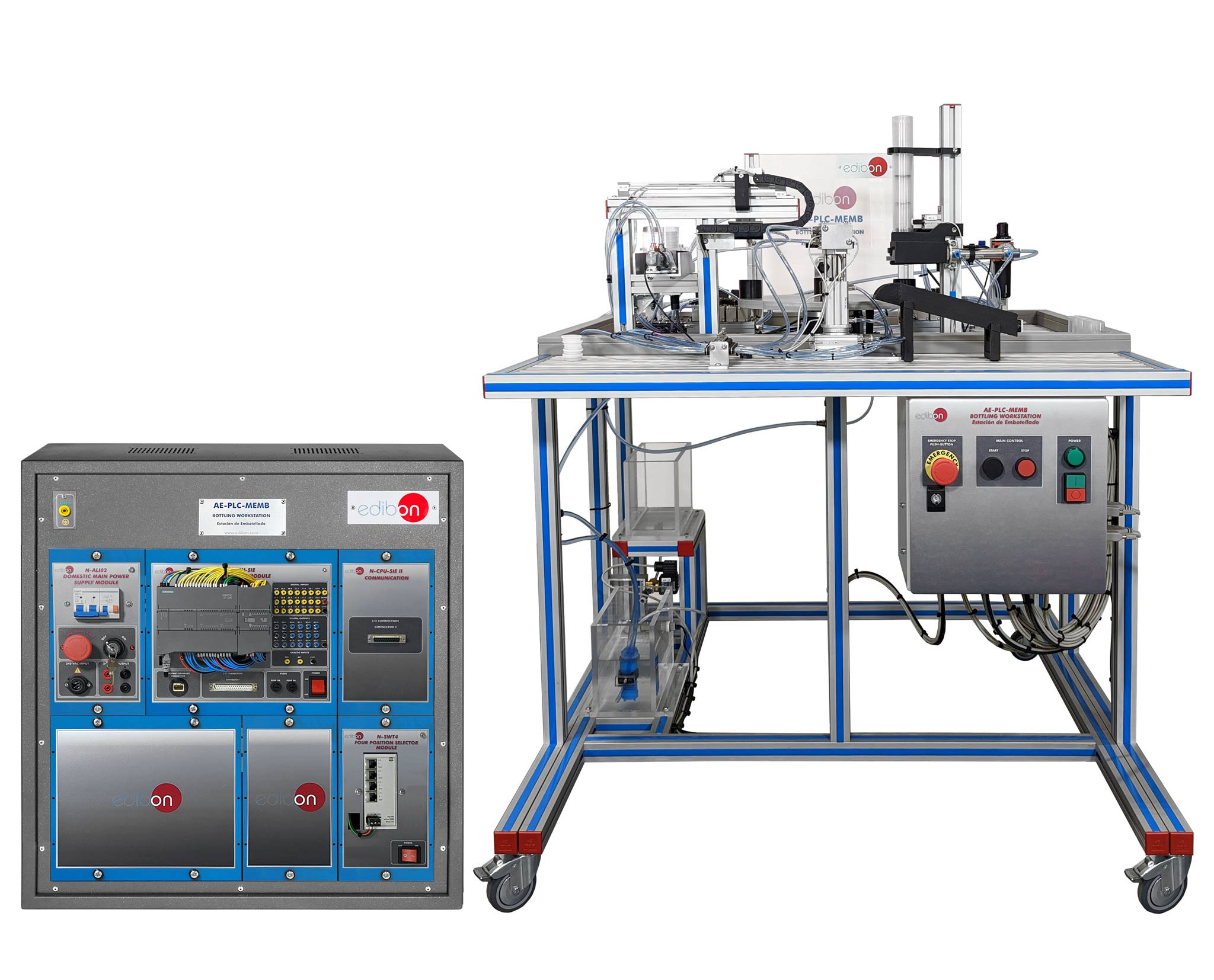
- Bottling Station (AE-PLC-MEMB): Designed to simulate an industrial bottling line, this workstation allows users to analyze automated filling, transportation, and production control processes. It is ideal for learning automation applied to the food and beverage industry.
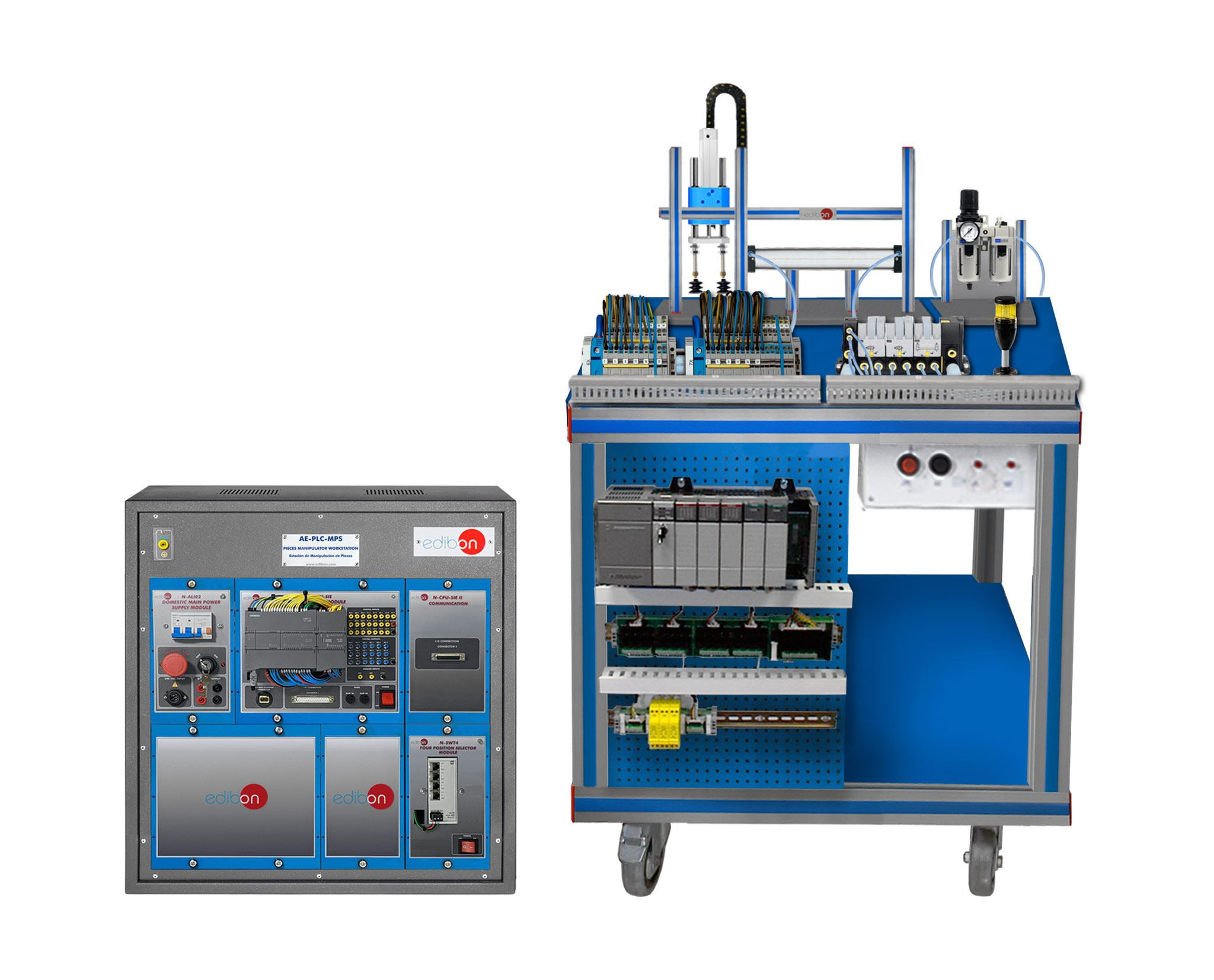
- Pieces Manipulator Workstation (AE-PLC-MPS): This application focuses on the automatic handling of parts through mechatronic systems controlled by PLCs. Students can learn concepts related to industrial robotics, positioning, and motion automation.
- AC Conveyor Belt Workstation (AE-PLC-CTCA): Conveyor belts are one of the most widely used systems in industrial automation. This workstation allows the study of motor control, detection sensors, and automated transport systems through PLC programming.
- Ball Selection Workstation (AE-PLC-SLB): This workstation is designed for the study of automatic sorting and selection processes. Thanks to the use of sensors and programmable logic, students can understand real industrial inspection and classification systems.
PLC: The Bridge Between Theory and Real Industry
One of the greatest challenges in technical education is bridging the gap between academic learning and industrial reality. PLC control helps reduce this gap by replicating the same principles used in actual production facilities.
As a result, students not only learn how to program a system, but also gain a comprehensive understanding of how all the components of an industrial installation interact: sensors, actuators, mechanical systems, and control logic.
This practical approach is essential for preparing professionals to meet the challenges of Industry 4.0.
Flexibility, Modularity, and Learning Evolution
Another key aspect of mechatronics education is the ability of laboratories to evolve. Modern training systems must be modular, scalable, and adaptable to emerging technologies.
EDIBON develops its equipment based on this philosophy, allowing laboratories to expand progressively and incorporate new workstations, technologies, or configurations according to educational and research requirements.
This transforms EDIBON solutions into living learning tools capable of evolving at the same pace as industry itself.
The PLC as the Brain of Modern Automation
PLC control is not simply another technology within industrial automation; it is the core that enables systems to operate in a coordinated, efficient, and safe manner.
In modern mechatronics, the PLC acts as the brain that connects the physical world with control logic, making smart factories, automated processes, and advanced industrial systems possible.
PLC Mechatronics training requires environments that accurately reproduce industrial reality. Through its modular workstations and the possibility of integrating different PLC platforms according to each customer’s needs, EDIBON provides a flexible, up-to-date solution aligned with the standards currently used throughout the global industrial sector.
Industrial automation will continue to play a leading role in the future of manufacturing. In this context, practical training in PLC technologies becomes an essential tool for preparing the professionals who will lead the next generation of industry.
Through its industrial workstations, flexible approach, and ability to adapt to the most widely used PLC platforms on the market, EDIBON provides educational institutions and training centers with a learning experience that closely reflects industrial reality, contributing to the development of the skills required by Industry 4.0.
Her profile combines the analytical and structured mindset of engineering with a practical focus on product development, process optimization, and cross-functional coordination. She works with clear criteria of quality, usability, consistency, and reliability, ensuring that products are technically sound and aligned with both business and user needs.
Throughout her career, she has contributed to initiatives related to product and process improvement, digital solutions, and structured project management, participating in the definition, coordination, and continuous evolution of products and services. She brings an analytical vision together with attention to detail, clarity, and coherence, allowing her to adapt products to different contexts, markets, and brand requirements.
Interested in innovation, digital evolution, and best practices in product development, she approaches her work from a practical, well-documented perspective focused on continuous improvement and the creation of useful, reliable, and high-quality products for end users.
- The future of energy: Revolutionizing Smart Grids - 7월 21, 2026
- The Importance of Practical Training in PLC Systems - 7월 21, 2026
- From design to manufacturing: Quality at every stage - 7월 16, 2026