
Digitalization is transforming the way technical laboratories are designed, managed, and used. In 2026, technologies such as data acquisition, real-time monitoring, automation, augmented reality, and remote laboratories are no longer simply innovative systems; they have become key elements for improving technical education, research, and laboratory efficiency.
For universities, vocational training centers, research institutions, and R&D departments, moving toward a digitalized technical laboratory makes it possible to make better use of equipment, optimize processes, and prepare students and professionals for increasingly connected industrial environments.
But what are the main benefits of digitizing a technical laboratory?
1. Greater process control and monitoring
One of the main benefits of digitalizing technical laboratories is the ability to monitor processes more accurately and in real time.
The integration of sensors, data acquisition systems, and digital platforms makes it possible to collect information on different experimental parameters, visualize it, and analyze it immediately. This facilitates the detection of deviations, improves control during practical sessions, and enables more reliable results to be obtained.
In addition, having data in digital format makes it easier to store and analyze it at a later stage. Students and professors can compare results, identify trends, and gain a more practical understanding of how different variables affect the behavior of a system.
In this context, digitalization transforms the laboratory into a more connected environment, where data becomes a fundamental system for learning and decision-making.
2. Automation to improve efficiency and safety
Automation is another key pillar of smart technical laboratories.
Automating certain operations helps reduce repetitive tasks and allows more time to be devoted to analyzing and interpreting results. At the same time, digital control systems can help maintain specific parameters within predefined ranges and improve safety during practical sessions.
This combination of automation, monitoring, and control is particularly relevant in fields such as engineering, energy, chemistry, mechatronics, and industrial automation, where students need to become familiar with technologies similar to those they will encounter later in professional environments.
Digitalization, therefore, does not replace hands-on experimentation; it enhances it, making it more efficient, controlled, and aligned with real-world industrial environments.
3. Access to remote laboratories and greater flexibility
Digitalization also helps overcome one of the traditional limitations of laboratories: the need to be physically present to carry out certain experiments.
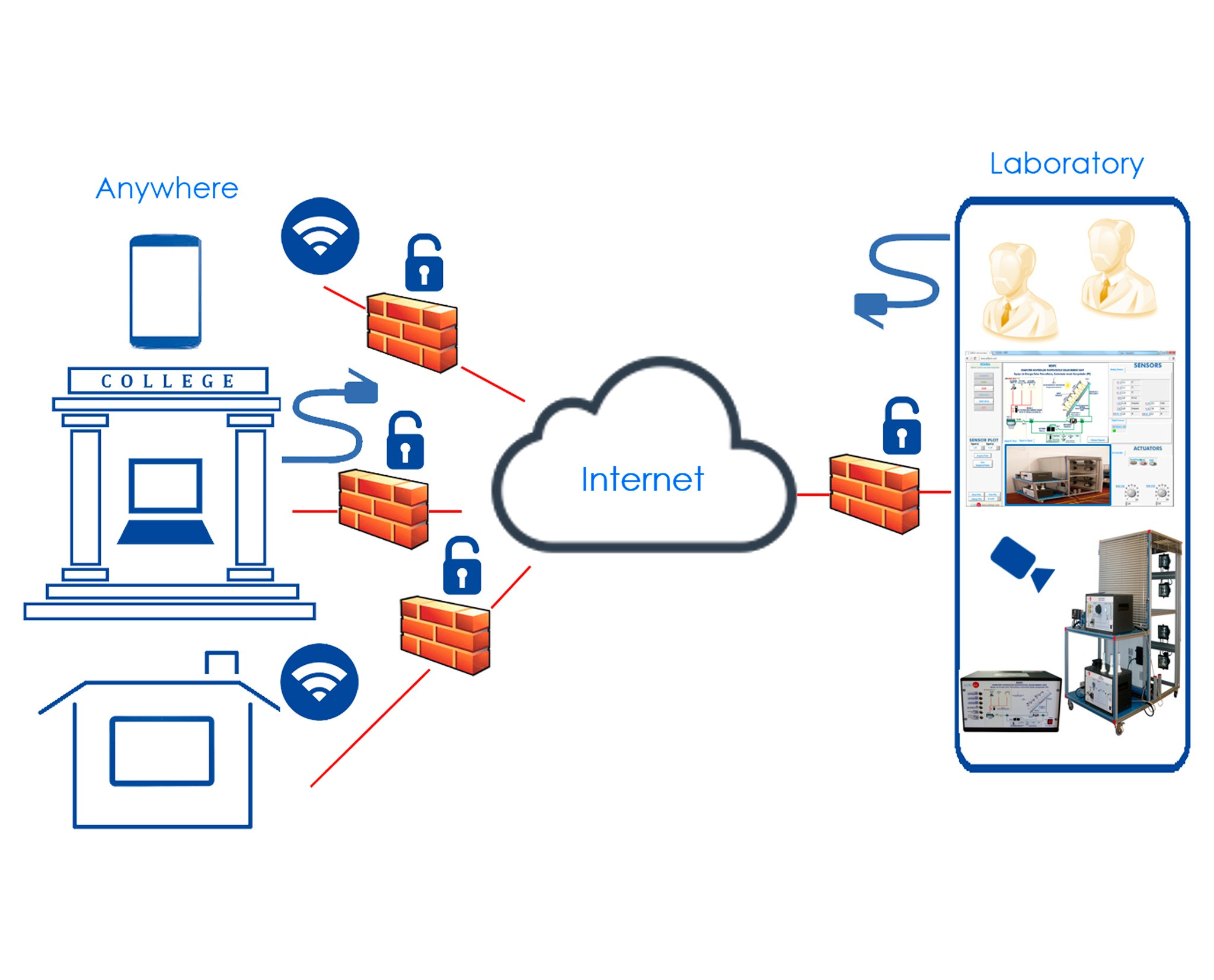
Remote laboratories provide access to specific equipment and practical exercises over the Internet, creating new opportunities for universities and training centers. Students can conduct practical sessions from different locations, while institutions can make greater use of their equipment over extended periods.
For institutions with large numbers of students or hybrid and online training programs, this flexibility can make a significant difference.
EDIBON offers ECL (EDIBON Cloud Learning),a platform designed to provide remote access to laboratory equipment. In this way, digitalization expands the possibilities for using equipment and creates more flexible and connected learning experiences.
4. More interactive learning experiences
A digitalized laboratory also offers new ways of learning.
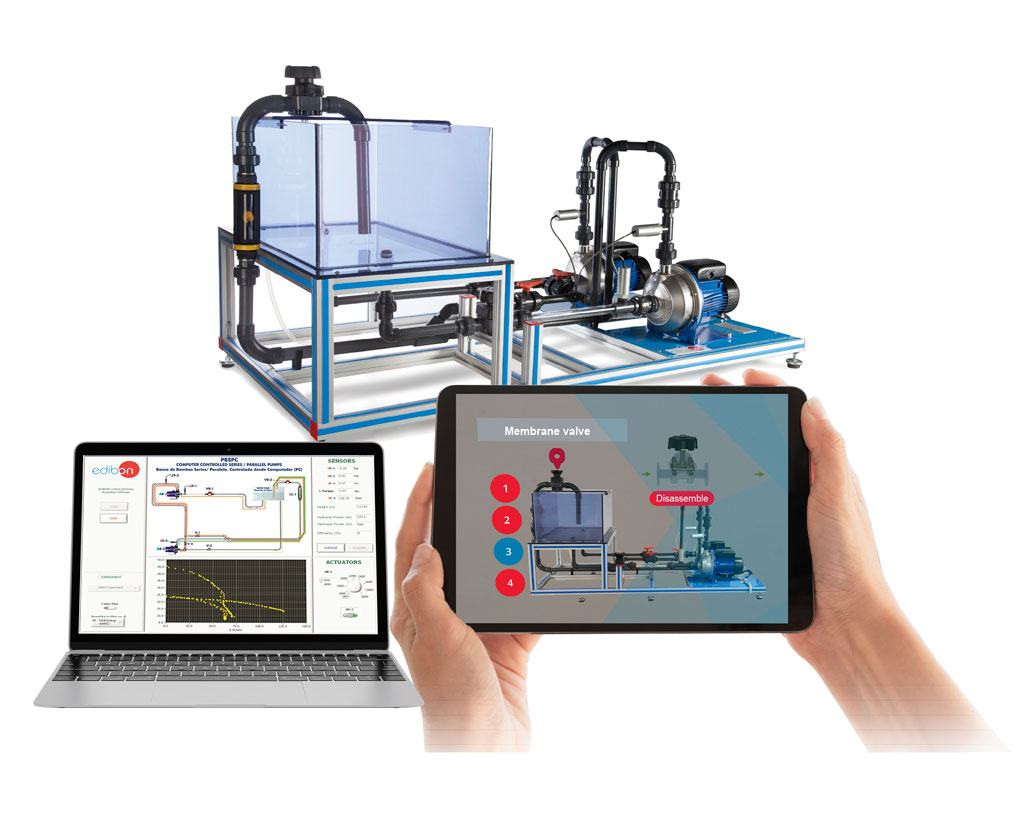
Digital systems can complement hands-on experimentation through interactive interfaces, data visualization, simulation, multimedia resources, and technologies such as augmented reality. This makes it possible to present complex concepts in a more visual way and facilitate the understanding of technical processes.
At EDIBON, for example, ARISE (Augmented Reality Instructional System by EDIBON) enables augmented reality to be incorporated into specific training experiences, helping students connect theoretical concepts with the operation of laboratory equipment.
These types of systems are particularly useful for ensuring that students do not simply follow a procedure, but also understand what happens behind each process and how its different variables interact.
5. Preparing for Industry 5.0 and the industrial environments of the future
Perhaps one of the most important reasons to digitalize technical laboratories in 2026 is the need to prepare future professionals for an increasingly digitalized industry.
Industry 5.0 requires professionals who are capable of working with automation, sensors, data acquisition, control systems, connectivity, and data analysis. For this reason, educational institutions need to provide hands-on experiences that are aligned with these technologies.
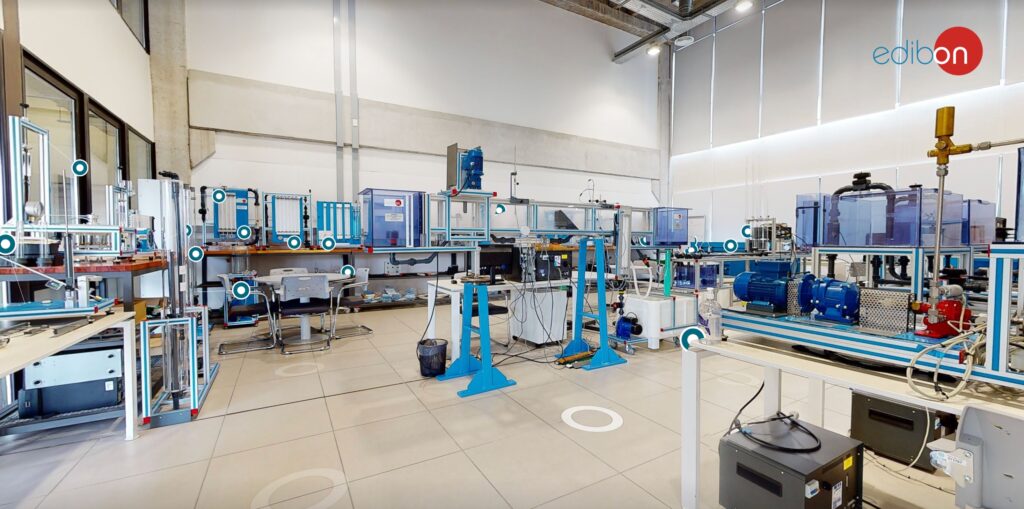
A modern technical laboratory must be more than a space equipped with machinery. It should become an environment where students can gain practical experience with technologies they will later encounter in the professional world.
How can EDIBON help digitalize a technical laboratory?
Digitalizing a laboratory requires much more than simply introducing individual digital systems. Equipment, control systems, software, and educational technologies need to work together in an integrated environment.
This is where EDIBON can make a difference.
EDIBON designs and manufactures equipment for technical education, research, and vocational training, incorporating digital technologies that enhance data acquisition, control, and interaction with laboratory equipment. Its comprehensive approach covers the entire process, from design and manufacturing to installation, training, and after-sales service.
In addition, its equipment can incorporate technologies such as SCADA, data acquisition and control systems, EDIBON Cloud Learning (ECL) for remote laboratories, and the Augmented Reality Instructional System by EDIBON (ARISE) for augmented reality-based learning experiences. These technologies make it possible to adapt the laboratory to the specific needs of each institution and move toward more connected training environments.
Digitalization is not simply about incorporating technology. It is about creating more efficient, accessible, interactive laboratories that are prepared to meet the needs of modern industry.
In 2026, taking this step enables universities, training centers, and research laboratories to make better use of their resources while providing students with hands-on experiences that are closer to real-world professional environments.
With its expertise in engineering, manufacturing, and technical education, EDIBON helps institutions transform traditional laboratories into digitalized, connected, and future-ready technical environments.
Her profile combines the analytical and structured mindset of engineering with a practical focus on product development, process optimization, and cross-functional coordination. She works with clear criteria of quality, usability, consistency, and reliability, ensuring that products are technically sound and aligned with both business and user needs.
Throughout her career, she has contributed to initiatives related to product and process improvement, digital solutions, and structured project management, participating in the definition, coordination, and continuous evolution of products and services. She brings an analytical vision together with attention to detail, clarity, and coherence, allowing her to adapt products to different contexts, markets, and brand requirements.
Interested in innovation, digital evolution, and best practices in product development, she approaches her work from a practical, well-documented perspective focused on continuous improvement and the creation of useful, reliable, and high-quality products for end users.
- How Industrial Automation Is Reducing Costs in the Food Industry
- 21 9 月, 2026 - 5 crucial benefits of digitizing Technical Laboratories in 2026 - 21 9 月, 2026
- The future of energy: Revolutionizing Smart Grids - 21 7 月, 2026