
The future of energy: Revolutionizing Smart Grids

Smart Grids represent one of the fundamental pillars of the ongoing transformation of the energy sector. Their role within the electrical system is to optimize energy generation, distribution, and consumption through the integration of digital technologies, automation, and real-time communication. This enables a more efficient, flexible, and resilient grid capable of incorporating renewable energy sources, managing demand, and responding intelligently to operational incidents.

Within EDIBON’s Energy area, Smart Grids are considered a key focus for advanced technical training and applied research. This field encompasses equipment designed to enable students, researchers, and professionals to understand and experiment with real-world energy systems. In this context, the Smart Grids and Power Systems area offers equipment that replicates complete electrical environments, from power generation to end-user consumption, integrating monitoring and SCADA control system.

Innovation at scale: A structured learning approach

One of the distinguishing features of EDIBON’s equipment for Smart Grid studies is that they are not standalone equipment, but rather part of a progressive training structure that allows users to advance from fundamental concepts to the simulation of complex scenarios typical of a real utility company. This methodology enables universities, training centers, and research institutions to adapt resources to different academic levels while progressively expanding learning and experimentation capabilities.

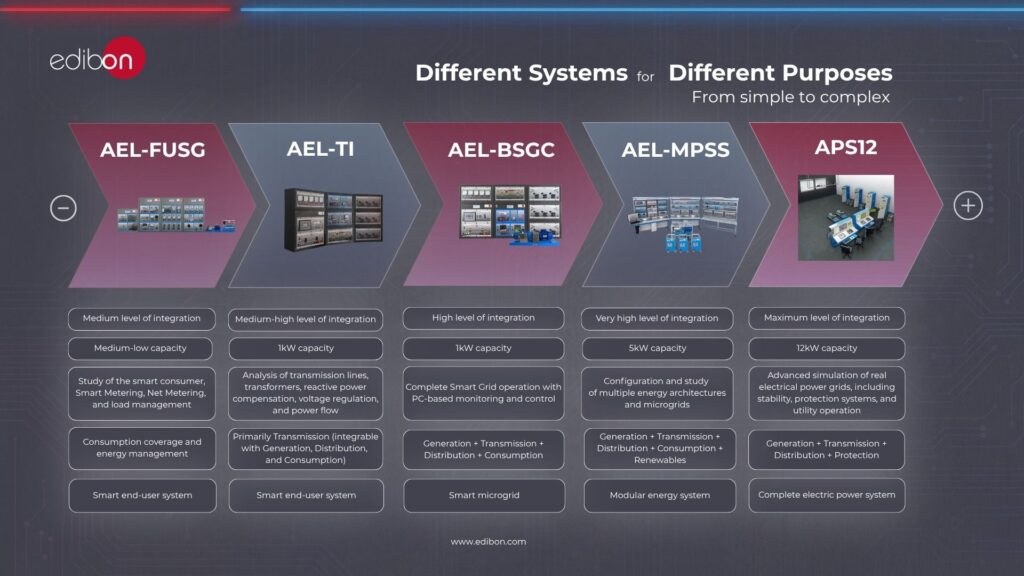
The range of equipment is organized into different levels, with each system complementing the previous one and allowing users to deepen their understanding of power generation, transmission, distribution, protection, and consumption:

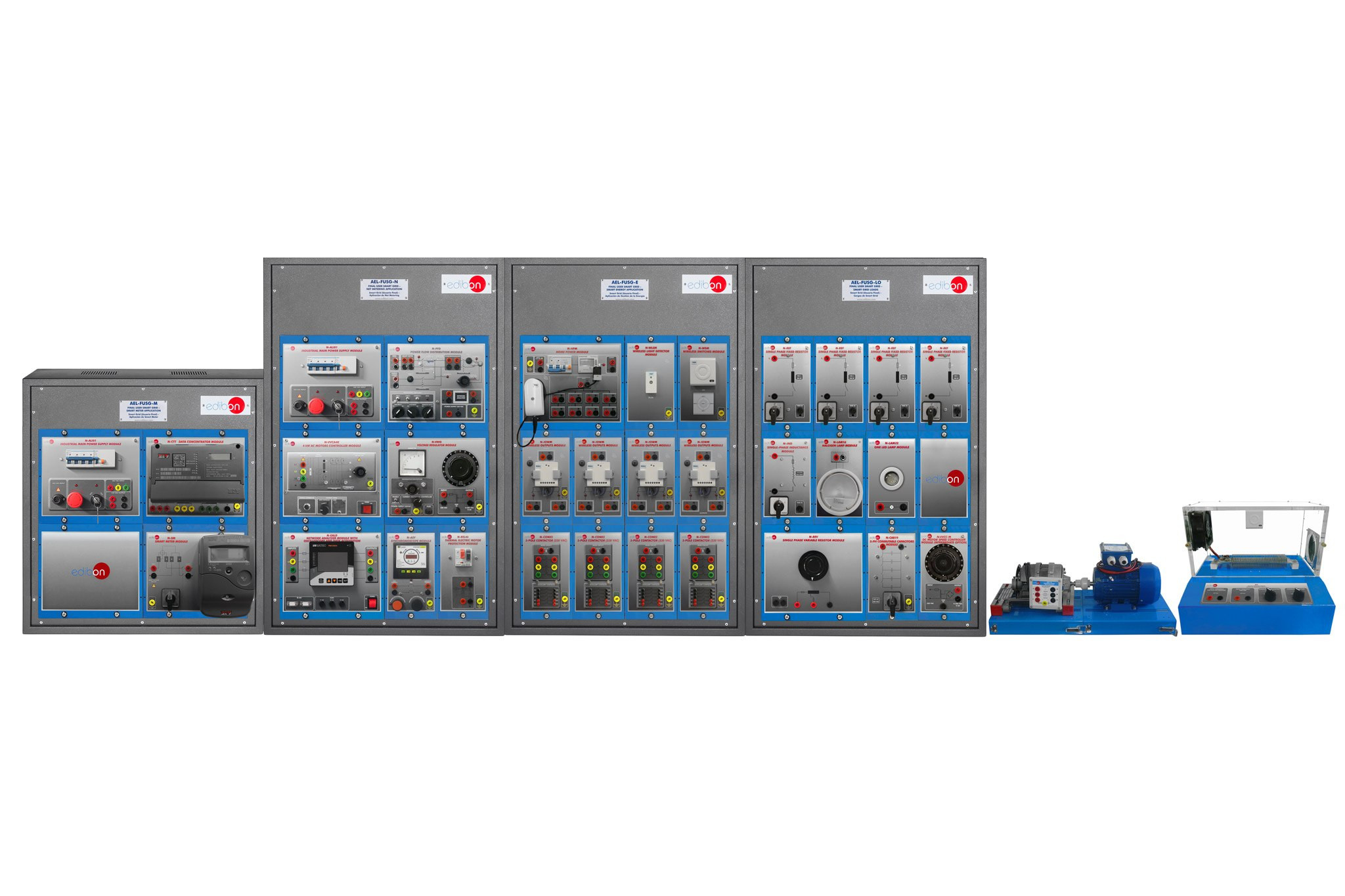
  • The Final User Smart Grid System (AEL-FUSG) : This unit incorporates all of these features and enables users to perform real-world applications related to current Smart Grids. It is a medium-level integration system with medium-low capacity, focused on the study of the smart end-user. It allows the analysis of concepts such as smart metering, net metering, consumption coverage, and energy management at the point of consumption within a smart grid environment.
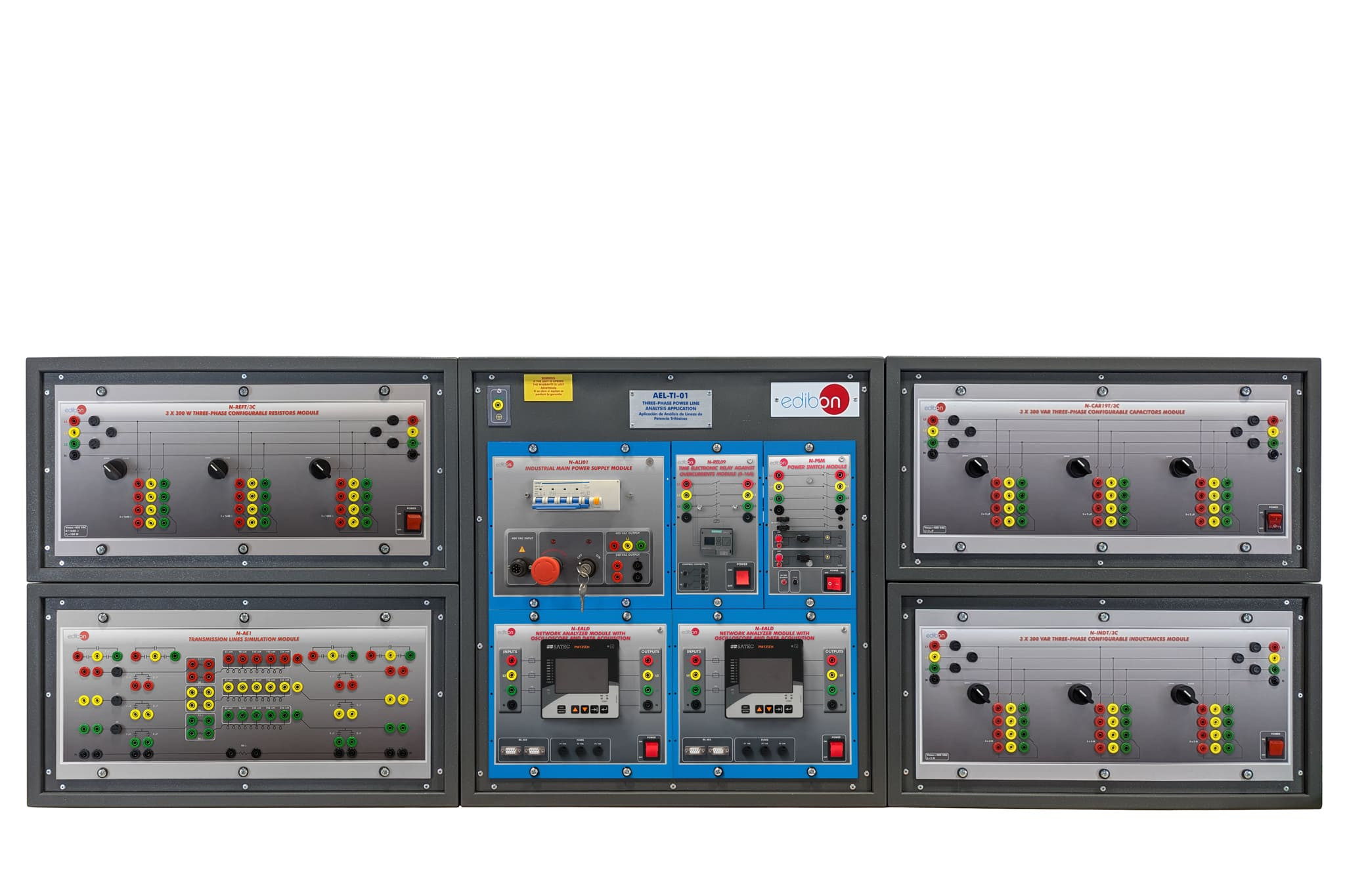
  • Power Transmission Applications (AEL-TI): Medium-high integration unit with 1 kW capacity, fully configurable and primarily oriented toward the study of transmission in three-phase generation, transmission, and consumption networks. Unlike closed solutions, the AEL-TI allows multiple configurations and microgrid scenarios to be defined, making it a flexible platform for analyzing phenomena such as capacitive effects, line losses, reactive power compensation, phase imbalance, and behavior under different load conditions. In addition, it can be integrated with other systems to complete the overall study of the Smart Grid.
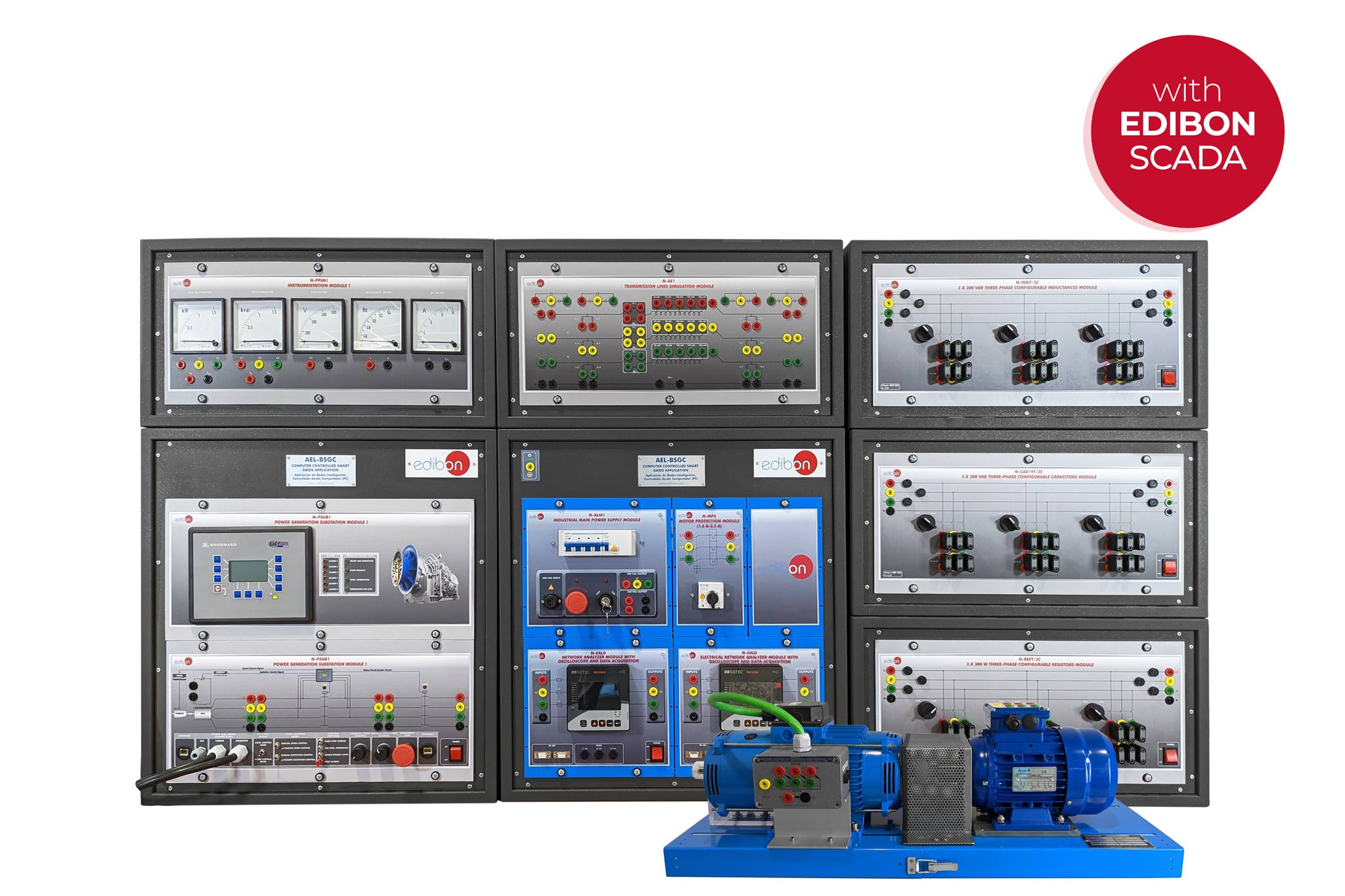
  • The Computer Controlled Smart Grids Application (AEL-BSGC): High-integration system with 1 kW capacity, developed as a closed solution to facilitate full Smart Grid operation with PC-based monitoring and control. It integrates generation, transmission, distribution, and consumption within a smart microgrid. Unlike the AEL-TI, it uses a fixed architecture and incorporates a turbine based on a squirrel-cage induction motor.
  • The Smart Grid Power System Series (AEL-MPSS): Series of very high-integration systems with 5 kW capacity, designed for the configuration and study of complex energy architectures and microgrids. It expands the scope of previous systems by enabling a complete analysis of generation, transmission, distribution, and consumption, while also incorporating renewable energy sources and different network topologies, aimed at advanced training and larger-scale scenarios.
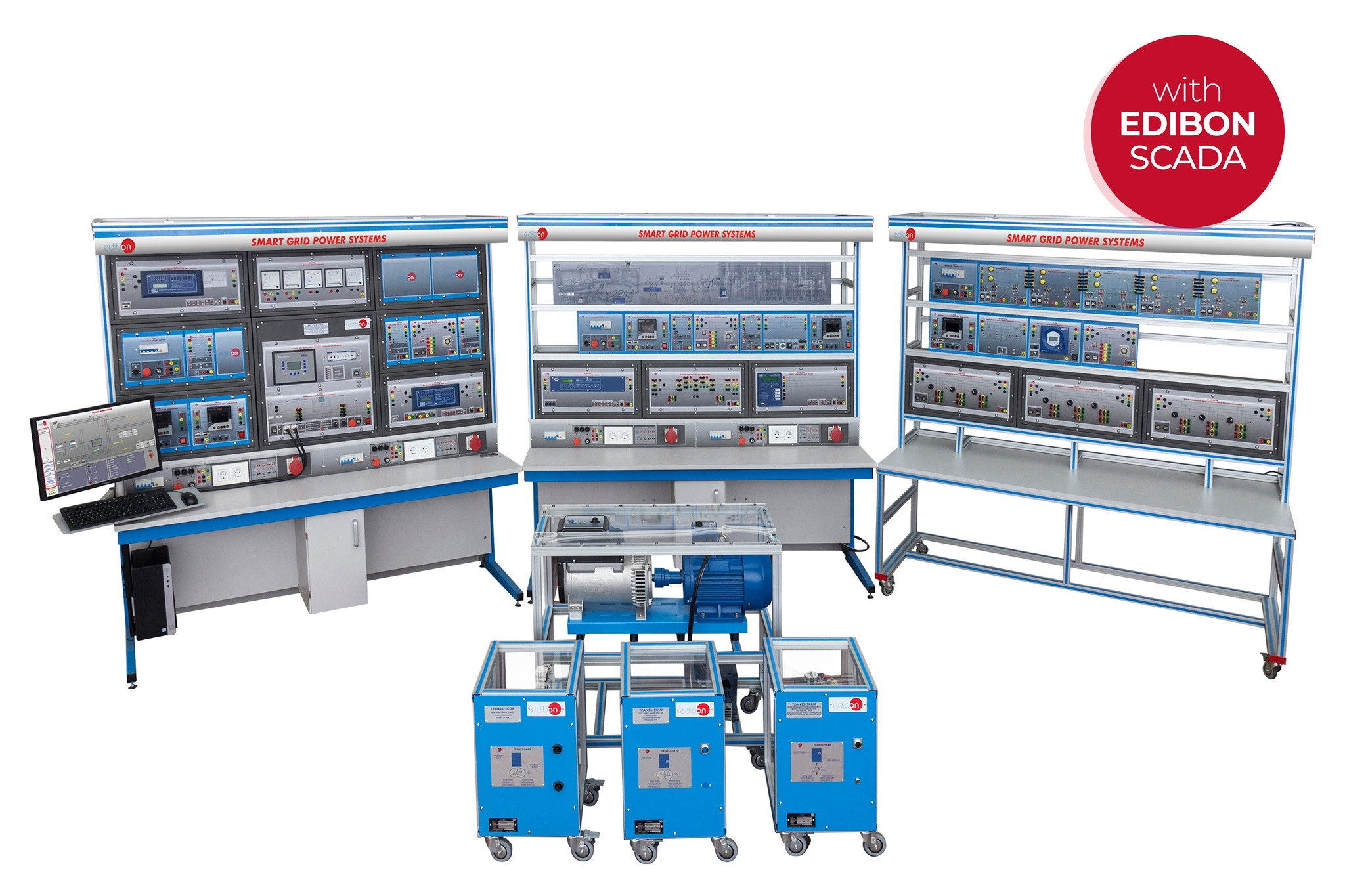
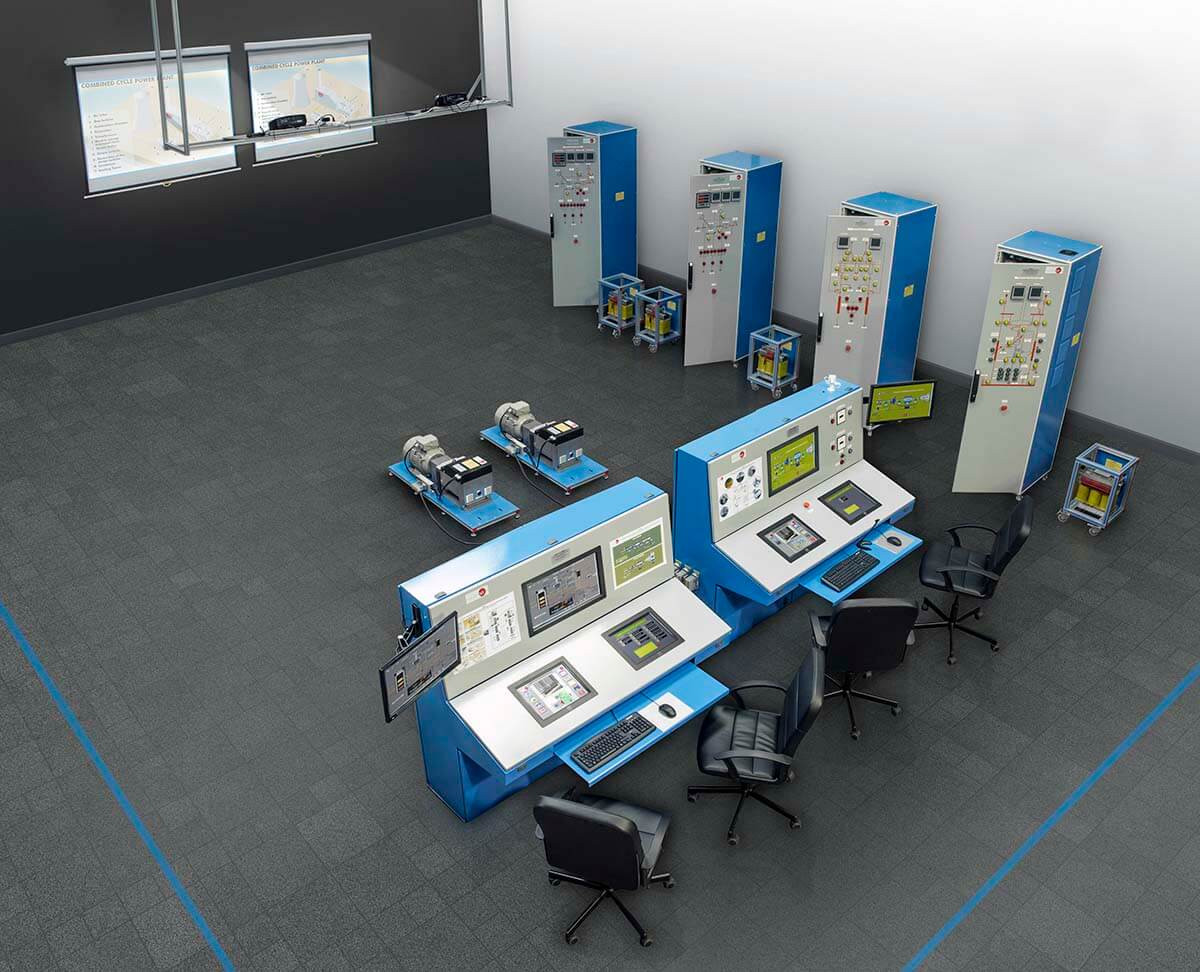
  • Advanced Mechanical, Electrical and Smart Grid Power Systems (Utilities) (APS12): Very high-integration systems with high capacity (up to 5 kW), considered among the most advanced on the market. Unlike microgrid-oriented systems, the APS12 operates with real power equipment, enabling direct analysis of electrical phenomena in complex power networks such as short circuits, overcurrents, overvoltages, overfrequency conditions, reverse power flow, generation failures, and blackouts, providing a fully realistic view of power system behavior.

Smart Grids represent the natural evolution of electrical systems toward more intelligent, sustainable, and resilient models, where digitalization and advanced control are essential to addressing today’s energy challenges. Understanding how these systems operate and gaining hands-on experience through real simulation environments are key to training the professionals who will lead the energy transition.

EDIBON equipment makes it possible to bridge the gap between theory and practice through a progressive learning structure. From the study of specific electrical phenomena and power line analysis to the operation of complete smart grids and the simulation of utility-scale scenarios, each solution is integrated into a unified training pathway.

This scalability positions EDIBON as a benchmark for universities, training centers, and research institutions seeking to realistically reproduce the current challenges of the energy sector.

Beatriz Bonilla
Logo Edibon
相关产品